The Blueprint for Home Services Marketing: Strategies, Data, and What Actually Works
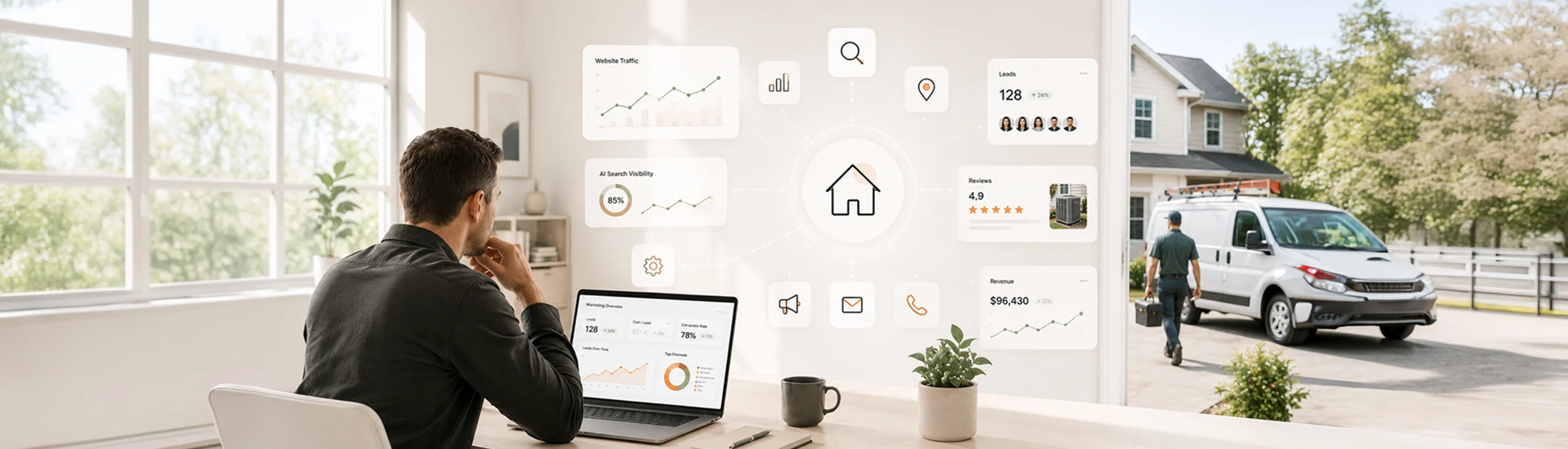
If you’re running an HVAC company, a plumbing business, a roofing contractor, or any other home service operation, the old marketing playbook isn’t cutting it anymore. You need a real blueprint. Not a list of vague tips. A structured, channel-by-channel strategy that accounts for how your customers actually find and choose a service provider in 2026.
That’s exactly what this guide delivers.
COLAB has built this blueprint by analyzing current industry data, real search behavior, and what’s working across paid, organic, local, and content channels right now. Whether you’re building your first home services marketing plan from scratch or auditing what you already have, this guide gives you the full picture.
What Is Home Services Marketing And Why It’s Harder Now
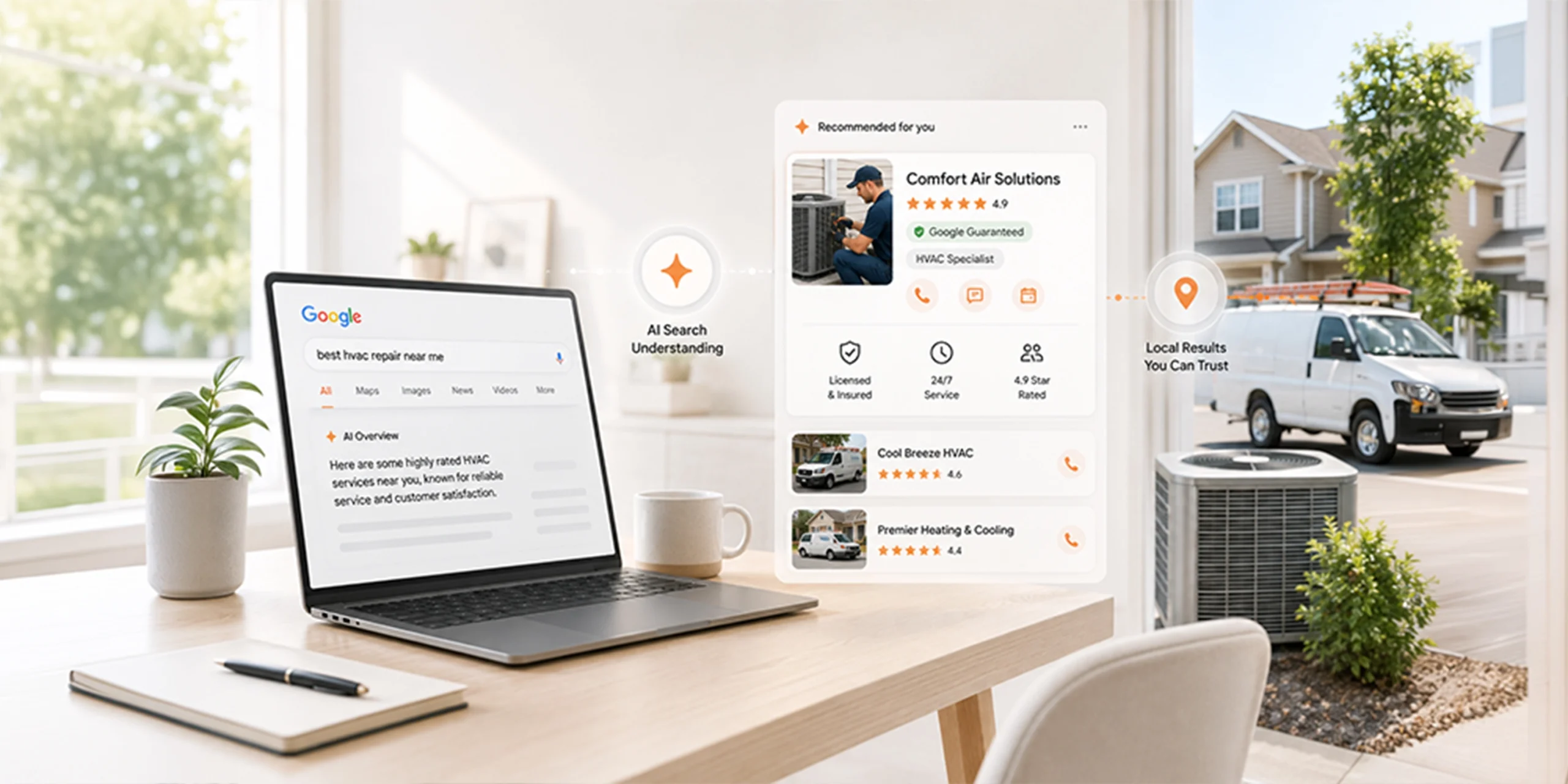
Home services marketing is the set of strategies and channels a service-based business uses to attract new customers, convert leads, and retain existing ones, both online and offline. It covers everything from Google rankings and paid ads to review management, email follow-ups, and social media.
That definition sounds straightforward. The execution is not.
Here’s why marketing for home service companies has gotten significantly more complex:
- Competition has surged. Private equity has poured money into home services, creating large, well-funded regional and national brands competing directly with local operators for the same search terms and ad placements.
- AI is reshaping discovery. A growing share of homeowners now get service recommendations from AI tools, Google’s AI Overviews, ChatGPT, and voice assistants before they ever click a website. Businesses that aren’t optimized for these environments are invisible to a meaningful percentage of potential customers.
- Customer expectations are higher. Speed of response, online reviews, professional websites, and easy booking are now baseline requirements, not differentiators.
- The channel mix is more complex. Running one ad or having a basic website used to be enough. Now, home service business marketing requires a coordinated mix of local SEO, paid search, social, content, email, and reputation management working together.
The businesses pulling ahead aren’t necessarily the ones with the biggest budgets. They’re the ones with the clearest strategy, the most consistent execution, and the best understanding of how their customers make decisions.
Home Services Marketing Trends Shaping 2026
The home services industry is in the middle of a genuine shift, not a gradual evolution, but a meaningful change in how leads are generated, how trust is built, and how customers choose a provider.
These are the trends you need to build your marketing strategy around this year:
AI Search Is Changing the Top of the Funnel
Google’s AI Overviews now appear at the top of results for a large share of home services queries. Instead of clicking through to a website, users get a summarized answer, and a short list of recommended businesses. Getting featured in those answers requires structured, authoritative content, strong local signals, and clear entity data on your website.
This is why GEO (Generative Engine Optimization) has become a real part of home service digital marketing strategy in 2026, not just traditional SEO.
Competition Is Getting More Sophisticated
A recent industry survey of nearly 1,000 home services professionals found that competition is no longer just coming from the local competitor down the road. National brands, franchise operators, and venture-backed aggregators are entering local markets with aggressive ad budgets and professional marketing infrastructure. Independent operators who don’t invest in their digital presence are losing ground faster than they realize.
The Vendor Sprawl Problem
Many home services businesses are paying for five to eight different marketing tools, an SEO platform, a review management tool, a social scheduler, a CRM, a PPC agency, a website host, and none of them talk to each other. The result is wasted spend, unclear attribution, and no real picture of what’s actually driving leads.
The trend moving into 2026 is consolidation: fewer vendors, clearer systems, and tighter integration between marketing and operations.
Seasonal and Emergency Search Behavior Is Accelerating
Homeowners are increasingly searching for services in high-urgency, time-sensitive moments, a broken furnace in January, a clogged drain before a dinner party, a roof leak during a storm. Effective online advertising strategies for emergency home services and seasonal home services now require always-on campaigns with fast-loading landing pages, mobile-optimized ad experiences, and rapid response infrastructure on the back end.
The Modern Homeowner Journey: From Search to Signed Contract
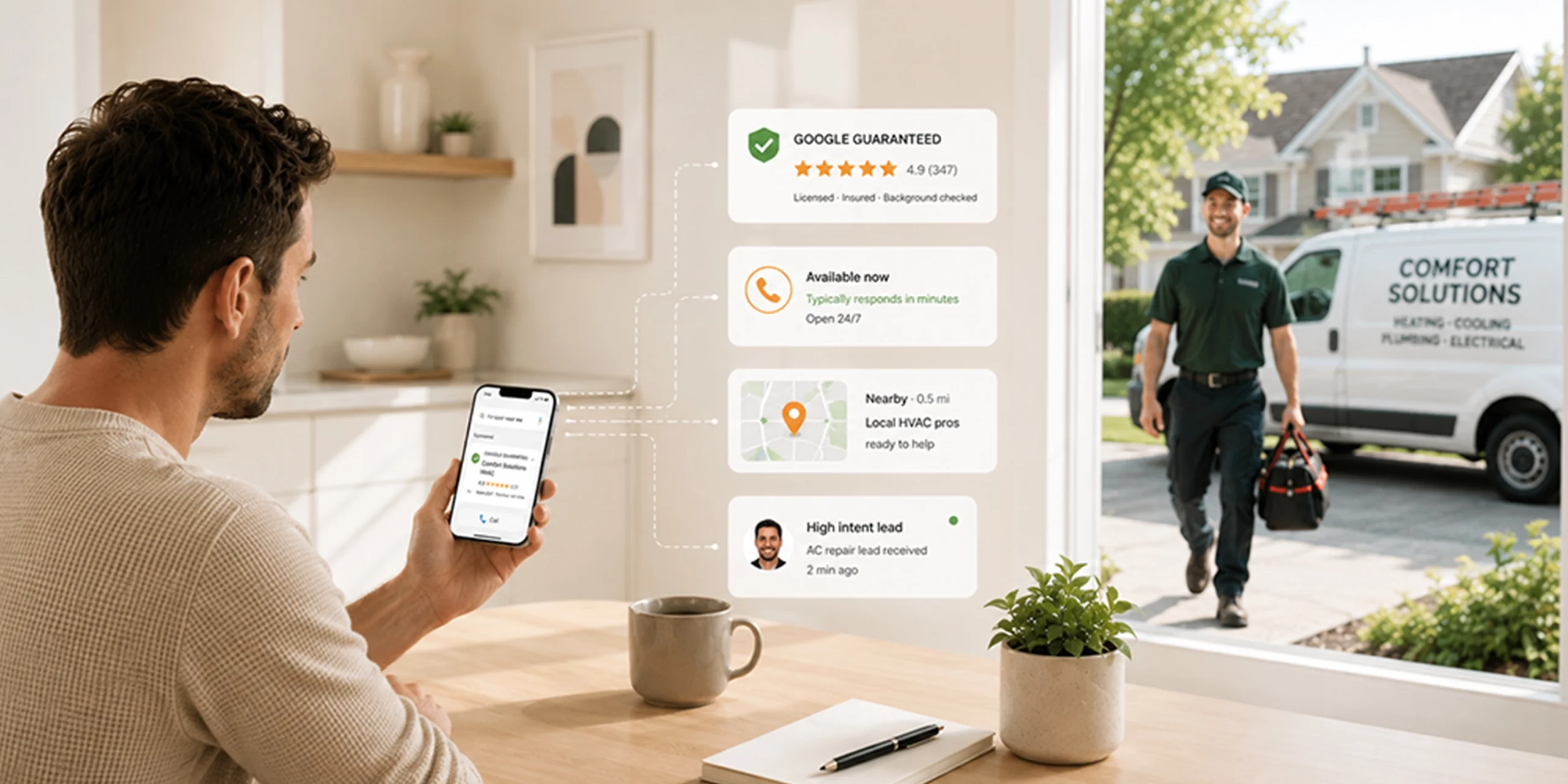
Before you invest a dollar in any marketing channel, you need to understand exactly how your customers find you and make a decision. The homeowner journey in 2026 is not a straight line, but it follows a predictable pattern you can map and market to at every stage.
Stage 1: Awareness (They Realize They Have a Problem)
Something breaks, wears out, needs upgrading, or gets flagged during a home inspection. The homeowner shifts from passive to active. At this stage, they’re not ready to book, they’re trying to understand their options. Content marketing, social media, and educational blog posts serve this stage well.
Stage 2: Search (They Start Looking for Solutions)
This is where most of the marketing spend happens, and where most businesses fight for attention. The homeowner turns to Google (or increasingly, an AI tool) and searches for a solution. They might search “why is my AC not cooling” before they search “AC repair near me.”
This means your SEO and content strategy need to cover both problem-aware and solution-aware queries, not just service pages targeting bottom-of-funnel keywords.
Stage 3: Evaluation (They Compare Their Options)
Once they have a short list of providers, usually two to four, they evaluate. They look at:
- Google reviews and star ratings
- Website professionalism and clarity
- Pricing transparency (or the lack of it)
- Speed of response to a quote request
- How easy it is to book or call
This is where your reputation management, website design, and offer clarity either win or lose the job.
Stage 4: Conversion (They Book)
The homeowner makes a decision. Frictionless booking, fast phone response, a clear offer, and a trustworthy brand close the deal. If your booking process is slow or confusing, leads that you paid to generate go to a competitor who makes it easier.
Stage 5: Retention and Referral (They Become Repeat Customers and Advocates)
The job doesn’t end when the invoice is paid. A customer who had a great experience and gets a timely follow-up email, a seasonal maintenance reminder, or a referral incentive is worth five times more than a single-job customer. The businesses with the strongest home services marketing plans build retention and referral mechanics into their systems, not as an afterthought, but as a core growth channel.
Building a Strong Website and Technical Foundation
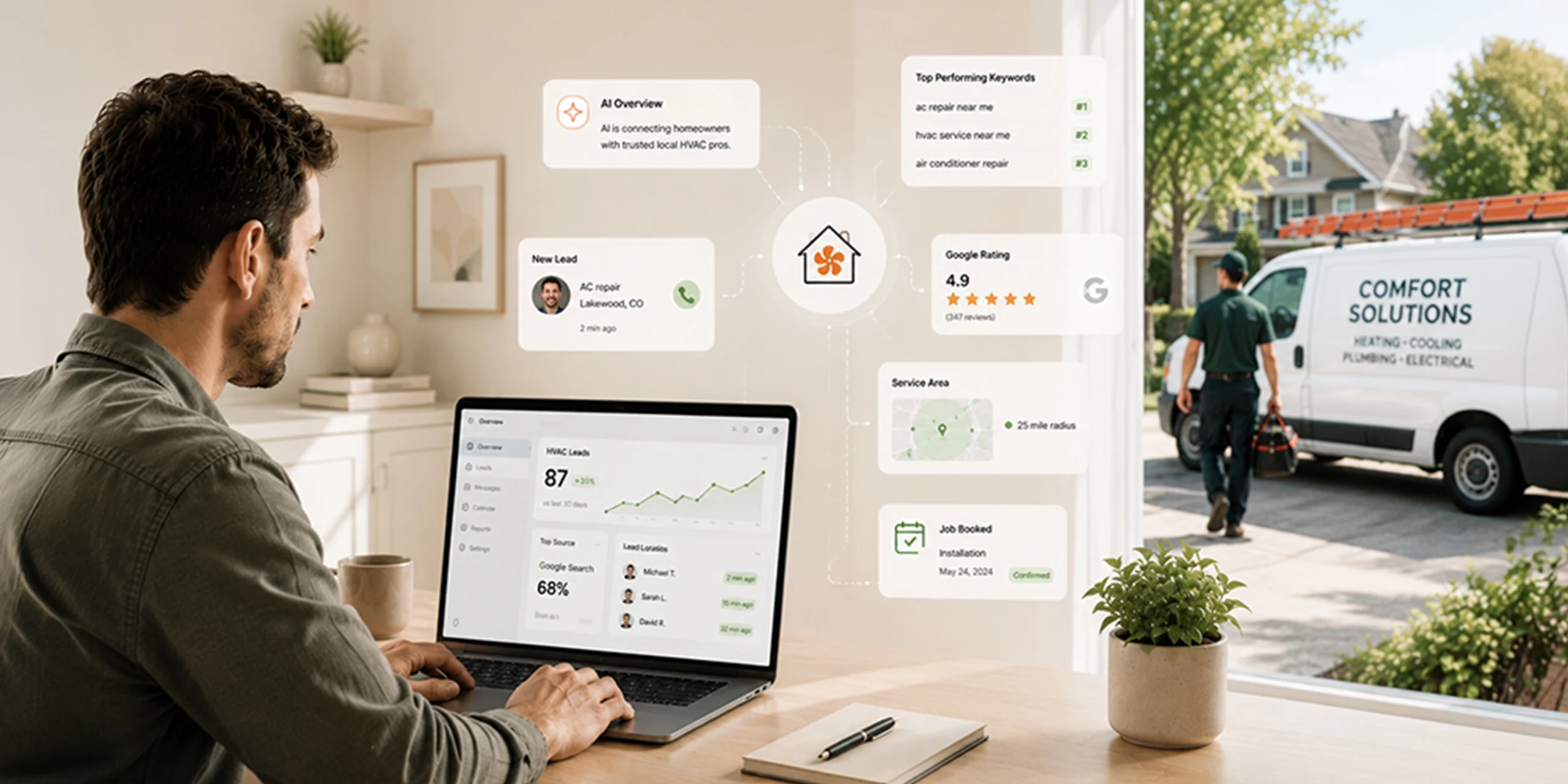
Your website is not just a digital business card. It is the hub of every marketing channel you run. Every ad you pay for, every search ranking you earn, every review that convinces a homeowner to call, they all lead back to your website. If that foundation is weak, everything built on top of it underperforms.
Here’s what a high-performing home services website needs in 2026:
Mobile-First Is Non-Negotiable
More than 70% of home services searches happen on a mobile device, often in the middle of a stressful moment. A homeowner with a burst pipe is not sitting at a desktop. They’re on their phone, searching fast, and making a decision within seconds. If your site loads slowly, displays poorly on a small screen, or buries the phone number, you’ve already lost them.
Your site needs to load in under three seconds on mobile, display click-to-call buttons prominently, and present your core services without making anyone scroll through paragraphs of text to find what they need.
The Pages You Actually Need
Most home services websites get by with far fewer pages than they should have. A strong site structure for home service digital marketing includes:
- Homepage, clear value proposition, service summary, trust signals, and primary CTA
- Individual service pages, one dedicated page per service (not one page listing all services)
- Location or service area pages, especially important for multi-location operators or franchisees
- About page, team, credentials, years in business, and license/insurance info
- Reviews/testimonials page, pulls together your best social proof in one place
- Blog, fuels SEO, content marketing, and AI search visibility
- Contact/Booking page, frictionless, fast, and functional on mobile
Technical SEO Basics That Are Often Missed
Even well-designed home services websites frequently have technical issues that quietly suppress rankings and conversions:
- Missing or duplicate meta titles and descriptions
- No schema markup (LocalBusiness, Service, Review schema)
- Broken internal links or orphaned pages
- Slow Core Web Vitals scores
- No SSL certificate or mixed content errors
- Unoptimized images adding unnecessary page weight
A technical audit, using tools like Screaming Frog, Semrush, or SEO Powersuite, should be the first step before investing heavily in any other marketing channel. You can’t rank a broken website, and you can’t convert traffic on a slow one.
Local SEO in Home Services Marketing: How to Dominate Your Market Without Paying Per Click
For most home service companies, local SEO is the single highest-ROI marketing investment available. It generates leads consistently, compounds over time, and doesn’t stop working the moment you pause a campaign.
The goal of local SEO is simple: when someone in your service area searches for what you do, your business appears at the top, in Google’s local map pack and in organic results.
Google Business Profile: Your Most Important Local Asset
Your Google Business Profile (GBP) is the foundation of local search visibility. It’s what populates the map pack, feeds Google’s AI Overviews for local queries, and displays your reviews, hours, photos, and contact information directly in search results.
Optimizing your GBP means:
- Selecting the most accurate primary and secondary business categories
- Writing a keyword-rich business description (without keyword stuffing)
- Uploading high-quality photos of your team, vehicles, equipment, and completed work
- Posting weekly updates, offers, or seasonal content
- Actively collecting and responding to Google reviews
- Keeping your hours, service areas, and contact details accurate and updated
An incomplete or neglected GBP is one of the most common reasons home services businesses don’t show up when they should.
On-Page Local SEO
Beyond your GBP, your website needs to send consistent local signals:
- NAP consistency, your Name, Address, and Phone number must be identical across your website, GBP, and every directory listing
- Location-specific landing pages, if you serve multiple cities or neighborhoods, build a dedicated page for each one with unique, useful content
- Local keyword integration, naturally include your city, region, and service terms in page titles, H1s, meta descriptions, and body content
- Local schema markup, implement LocalBusiness schema on your homepage and service pages to help search engines and AI tools understand exactly who you are and where you operate
Citations and Directory Listings
Citations, mentions of your business name, address, and phone number on external directories, still matter for local SEO. Priority directories for home services businesses include Google, Yelp, Angi, HomeAdvisor, BBB, Houzz, and industry-specific platforms. Consistency matters more than volume. Inaccurate or conflicting listings can actively harm your local rankings.
Google Local Services Ads: The Pay-Per-Lead Advantage
If local SEO is your long game, Google Local Services Ads (LSAs) are your fastest path to qualified leads right now.
LSAs appear above everything else in Google search results, above regular paid ads, above the map pack, and above organic listings. They display your business name, star rating, years in business, and a direct call or message button. And critically, you only pay when a potential customer actually contacts you, not just when they see the ad.
Why LSAs Work Especially Well for Home Services
The pay-per-lead model makes LSAs one of the most cost-efficient forms of home services advertising available. You’re not paying for impressions or clicks from people who aren’t ready to hire. You’re paying for contacts.
LSAs also carry the Google Screened or Google Guaranteed badge, a trust signal that tells homeowners your business has passed background checks and license verifications. In an industry where trust is the primary buying factor, that badge does real conversion work.
How to Get Started With LSAs
- Create your LSA profile through Google’s Local Services Ads platform
- Complete the verification process, submit your license, insurance, and background check documentation
- Set your budget based on how many leads per week you want to receive
- Select your service categories and service areas precisely, overbroad targeting wastes budget
- Optimize your profile with strong photos, a compelling business description, and a high review count
- Dispute invalid leads, Google allows you to dispute leads that don’t match your services, protecting your budget
LSAs vs. Standard Google Ads
| Google LSAs | Google Search Ads (PPC) | |
| Placement | Above all ads | Below LSAs, above organic |
| Cost model | Pay per lead (call/message) | Pay per click |
| Trust signals | Google Guaranteed/Screened badge | None inherent |
| Setup complexity | Moderate (verification required) | High (campaign/keyword management) |
| Best for | High-intent, ready-to-book leads | Broader keyword targeting, brand visibility |
Most home services businesses benefit from running both, LSAs for immediate, high-intent leads and PPC for broader funnel coverage.
PPC and Google Ads for Home Services: Targeting the Right Lead at the Right Moment
PPC for home service companies gives you control that no other channel matches. You choose exactly which keywords trigger your ads, what your ads say, where they send people, and how much you spend per day. Done right, it’s a highly efficient lead generation machine. Done wrong, it burns the budget fast.
Keyword Strategy: Intent Is Everything
The biggest mistake home services businesses make with Google Ads is targeting keywords that are too broad. Bidding on “plumbing” or “HVAC” without proper match types and negative keywords means your ads show up for searches like “plumbing DIY fix” or “HVAC training courses”, people who will never hire you.
Effective keyword strategy for home services PPC focuses on:
- High-intent service keywords, “emergency plumber near me,” “AC repair [city],” “roof replacement quote”
- Problem-aware keywords, “why is my heater not working,” “water heater making noise”
- Competitor and comparison keywords, used strategically with clear differentiation messaging
- Negative keyword lists, aggressively filtering out DIY, jobs, training, and unrelated queries
Campaign Structure That Actually Converts
A well-structured home services Google Ads campaign separates services into individual ad groups, each with tightly themed keywords, specific ad copy, and a dedicated landing page, not your homepage. A homeowner clicking an ad for “gutter cleaning” should land on a gutter cleaning page, not a general services overview.
Key elements of high-converting home services landing pages:
- Headline that mirrors the ad, reinforces relevance immediately
- Clear, single CTA, one action: call, book, or get a quote
- Trust signals above the fold, reviews, years in business, license info
- Fast load time, especially on mobile, where most PPC traffic for home services arrives
- No navigation menu, remove distractions that pull visitors away from converting
Budgeting and Bidding
Home services is one of the most competitive industries in Google Ads, with average CPCs ranging from $15 to $80+ depending on the service and market. Smart bidding strategies, Target CPA or Maximize Conversions, work well once you have sufficient conversion data (typically 30+ conversions per month). Before that threshold, manual CPC bidding gives you more control and prevents the algorithm from overspending on low-quality signals.
Track phone calls as conversions. For most home services businesses, calls convert significantly better than form fills, and if you’re not tracking calls, you’re flying blind on your most important conversion action.
Meta Ads and Paid Social for Home Services
Google captures demand that already exists. Meta creates it.
When someone searches “emergency roof repair near me,” they’re already in buying mode. But the homeowner who hasn’t yet realized their aging HVAC system is about to fail, or the one who’s been putting off a bathroom renovation, they’re not searching yet. Meta ads for home services reach those people before they go to Google, putting your brand in front of them while they’re scrolling Facebook or Instagram.
That’s a fundamentally different job, and it requires a different creative approach.
What Works on Meta for Home Service Advertising
Meta’s targeting capabilities, based on homeownership status, household income, location, life events, and interest signals, make it one of the most precise platforms for digital advertising for home services. You can target homeowners within a specific zip code radius who fall within a household income bracket that aligns with your service tier.
Ad formats that consistently perform for home services businesses on Meta:
- Before-and-after creative, nothing communicates quality faster than a visual transformation. A roof before and after. A bathroom renovation. A backyard landscaping project. These stop the scroll.
- Offer-led ads, seasonal promotions, limited-time discounts, and bundled service offers with a clear deadline drive action from warm audiences
- Video testimonials, a 30 to 60 second clip of a real customer talking about their experience outperforms almost every other creative format for building trust
- Retargeting campaigns, showing ads to people who visited your website but didn’t convert is one of the highest-ROI uses of Meta budget. These audiences already know you. You just need to give them a reason to act.
Meta vs. Google: How to Think About Budget Allocation
Meta ads typically generate leads at a lower cost than Google PPC, but those leads are often earlier in the buying journey and require more nurturing. The most effective home services marketing strategies use both platforms in coordination: Google captures ready-to-buy traffic, Meta builds brand awareness and re-engages warm audiences.
A practical starting allocation for a home services business new to paid social: put 70–80% of paid budget into Google (LSAs + PPC) and 20–30% into Meta until you have enough data to optimize. Adjust based on actual cost-per-booked-job, not just cost-per-lead.
Content Marketing: Educate, Build Trust, and Convert
Content marketing is one of the most underutilized channels in home service industry marketing, and one of the most powerful for businesses willing to invest in it consistently.
The reason it works so well for home services is that homeowners have real questions. They want to know how often to service their HVAC system, what causes a circuit breaker to keep tripping, how much a new water heater actually costs, and whether they need a permit for a deck addition. If your business answers those questions with genuinely useful content, you build trust before a prospect ever calls, and you earn organic search traffic that compounds over time.
What to Create
A practical content marketing plan for a home services business doesn’t need to be complicated. Start with these content types:
- Service-specific blog posts, “How Long Does a Roof Replacement Take?”, “Signs Your AC Needs Replacing (Not Just Repairing)”. These target problem-aware and solution-aware searchers who are early in the buying journey.
- Cost and pricing guides, “How Much Does a New HVAC System Cost in 2026?” These are among the highest-traffic, highest-intent content pieces in the home services space. Homeowners want to understand pricing before they call. Give them a real range with context.
- FAQ content, structured Q&A content is read by both humans and AI answer engines. Pages built around specific questions your customers ask perform disproportionately well in Google’s AI Overviews and featured snippets.
- Project spotlights, a photo-heavy walkthrough of a completed job, written with location and service keywords woven naturally into the copy, serves double duty as both content marketing and local SEO.
- Seasonal content, “How to Prepare Your Plumbing for Winter” published every September earns consistent traffic year after year with minimal updates.
Content and GEO / LLM Readiness
In 2026, content needs to be written not just for human readers and traditional search engines, but for AI tools that summarize and surface answers directly. Content that gets cited by AI Overviews and tools like ChatGPT tends to share common traits:
- Clear, direct answers in the first paragraph of each section
- Structured headings that mirror the exact language of common questions
- Specific data points, figures, or expert perspectives rather than vague generalizations
- Short summary blocks that can be extracted and quoted without context loss
This is not about gaming algorithms. It’s about writing with enough clarity and specificity that your content is genuinely the best answer available, for a human reader or a machine summarizing results.
Email and SMS Marketing: Nurture Leads and Retain Customers
Most home services businesses focus almost entirely on acquiring new customers and almost nothing on retaining the ones they already have. That’s a costly imbalance.
Email and SMS marketing are the most direct tools you have for staying connected with past customers, nurturing unconverted leads, and generating repeat business, at a fraction of the cost of paid acquisition.
Email Marketing for Home Services
An effective email program for a home services business doesn’t need to be elaborate. It needs to be consistent and relevant.
Core email sequences to build:
- New lead nurture sequence, when someone fills out a form or requests a quote but doesn’t book, an automated sequence of two to three emails over seven to ten days keeps your business top of mind and addresses common objections. Include a clear CTA in every email.
- Post-service follow-up, sent 24 to 48 hours after job completion, this email thanks the customer, requests a Google review, and introduces your referral program if you have one
- Seasonal maintenance reminders, timed to relevant seasons for your services. An HVAC company emailing past customers in late February about spring AC tune-up specials is doing smart, low-cost marketing that generates real bookings.
- Re-engagement campaigns, for customers who haven’t booked in 12 to 18 months, a simple “we haven’t heard from you” email with a time-limited offer consistently reactivates a meaningful percentage of dormant contacts
SMS Marketing
SMS open rates run above 90%, compared to email open rates typically in the 20 to 30% range. For time-sensitive messages, appointment reminders, same-day availability alerts, or limited-time seasonal offers, SMS outperforms email significantly.
Keep SMS marketing permission-based, concise, and infrequent. Two to four messages per month per contact is a reasonable ceiling. Anything more and opt-out rates climb fast.
A simple, high-impact SMS use case for home services: send a same-day text to past customers when you have a technician available in their area with a limited-time offer. The response rate on hyper-local, timely offers via SMS is consistently strong.
Reputation Management and Five-Star Reviews
In home services, your reputation is your most valuable marketing asset. Before a homeowner calls you, they read your reviews. Before they decide between you and a competitor, they compare your star rating. Before they refer you to a neighbor, they recall how the experience felt.
Reputation management for home services is not passive. It requires an active, systematic approach to generating positive reviews and handling negative ones in a way that builds rather than damages trust.
How to Generate Reviews Consistently
The businesses with the most reviews are almost never the ones with the happiest customers, they’re the ones with the most systematic ask. Most satisfied customers don’t leave reviews unless prompted. Most dissatisfied ones do. That imbalance only gets corrected by building review requests into your post-job process.
What works:
- Ask in person, train your technicians to ask for a review at job completion, when customer satisfaction is highest. A simple, genuine ask is more effective than any automated message.
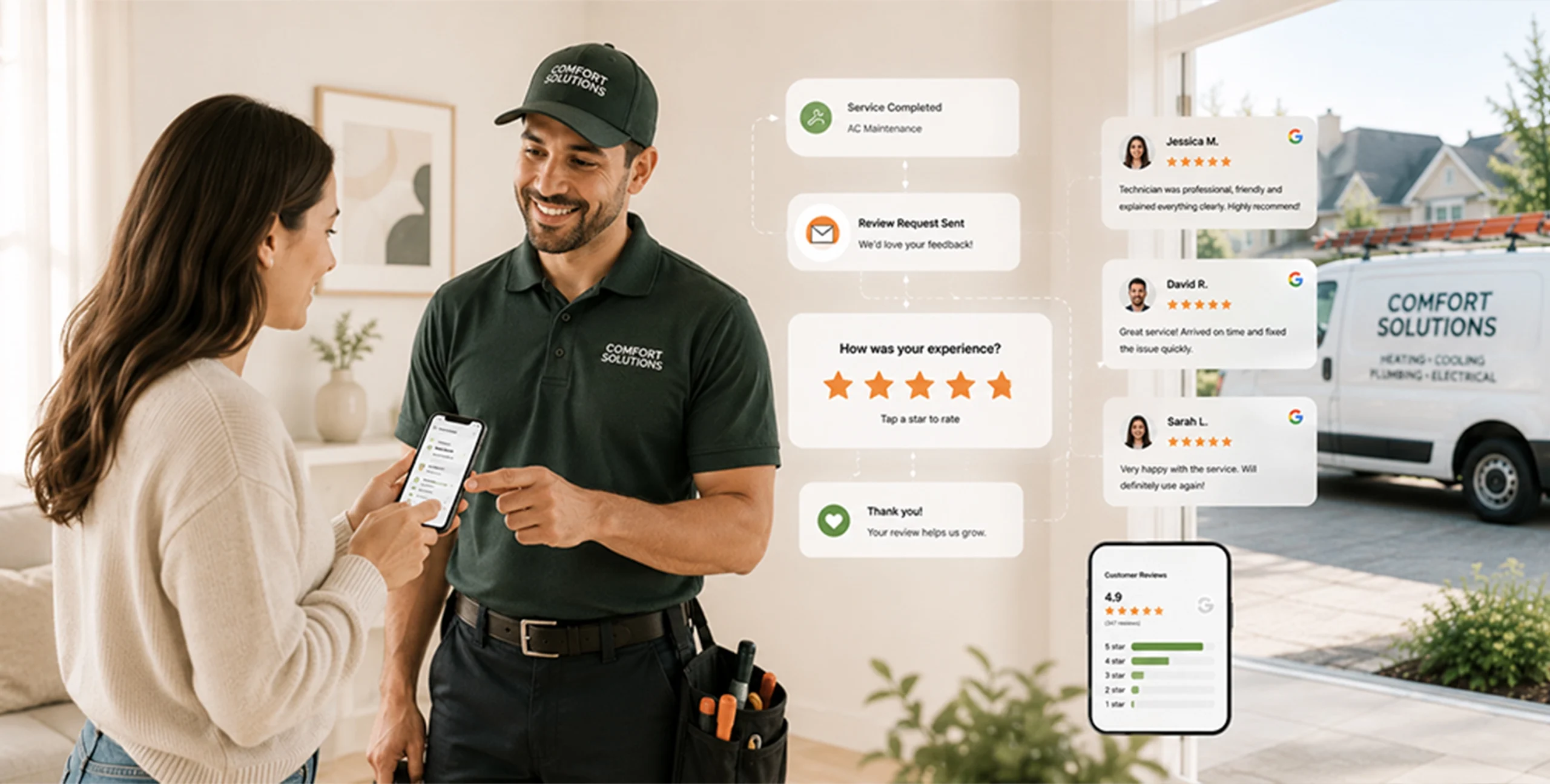
- Send a follow-up text or email, within 24 hours of job completion, send a short message thanking the customer and including a direct link to your Google review page. Remove every possible friction point.
- Make it frictionless, a QR code on an invoice, a direct review link in the email, a one-tap SMS link. The fewer steps between the customer and the review box, the higher your completion rate.
- Don’t incentivize reviews, Google’s policies prohibit offering discounts, gifts, or incentives in exchange for reviews. Beyond the policy violation, it tends to produce generic, unconvincing reviews anyway.
Responding to Reviews: The Part Most Businesses Skip
Responding to reviews, both positive and negative, signals to potential customers and to Google that your business is active, engaged, and accountable. Response rates and response quality are factors in local search ranking.
For positive reviews: respond warmly, specifically, and briefly. Avoid copy-paste responses, they read as automated and undercut the authenticity of the original review.
For negative reviews: respond promptly, acknowledge the concern without being defensive, and offer to resolve the issue offline. A well-handled negative review often builds more trust than a collection of unchallenged five-star ratings. It shows prospective customers that when something goes wrong, you respond like a professional.
Platforms to Prioritize
| Platform | Priority | Why |
| Essential | Directly impacts local search rankings and map pack visibility | |
| Yelp | High | Still heavily used for home services; appears in Google results |
| Angi / HomeAdvisor | High | Platform-native reviews affect visibility within the marketplace |
| Medium | Social proof for Meta ad audiences and referral traffic | |
| BBB | Medium | Trust signal for higher-ticket services (HVAC replacement, roofing, etc.) |
| Houzz | Niche | Valuable for renovation, design, and remodeling services specifically |
Case Studies and Social Proof: Turning Completed Jobs Into Lead Magnets
A five-star review tells a homeowner you did good work. A case study shows them exactly what that work looked like, what problem it solved, and what the result was. That specificity is what converts skeptical prospects into confident buyers.
Social proof for home services doesn’t need to be formal or lengthy. A well-executed case study for a home services business can be as simple as:
- The situation: what problem did the customer have? What were they worried about?
- The solution: what did your team do, and why was that the right approach?
- The result: what changed for the customer? Include specifics: timeline, scope, any measurable outcome
- A photo: before and after if possible, or at minimum a high-quality image of the completed work
- A quote: one or two sentences from the customer in their own words
Case studies work across multiple channels. Publish them on your website as standalone pages (they generate long-tail SEO traffic). Share them as social media posts. Repurpose them as email content. Reference them in sales conversations. The same piece of content earns value repeatedly across your entire home service company marketing ecosystem.
The key rule: never fabricate or embellish. A specific, honest case study from a real job is more persuasive than a polished but vague success story. Homeowners have good instincts for what’s real.
Organic Social Media Marketing for Home Services
Organic social media won’t replace paid advertising or SEO as a lead generation channel. But dismissing it entirely is a mistake, because the homeowners you want to reach are on social media every day, and a consistent, well-executed organic presence builds the kind of brand familiarity that makes every other channel perform better.
When someone sees your ad, visits your website, and then recognizes your brand from their Instagram feed, conversion rates go up. Familiarity is trust in its earliest form.
Choosing the Right Platforms
Not every platform deserves your time. For most home services businesses, the highest-value platforms are:
- Facebook: still the dominant platform for homeowners aged 35 and above, the core demographic for most home services. Facebook is where community groups, neighborhood pages, and local recommendations happen. Being active here means showing up where purchase decisions are being influenced.
- Instagram: ideal for visually driven services: landscaping, renovation, painting, roofing, bathroom and kitchen remodeling. Before-and-after content performs exceptionally well here and drives both follows and direct inquiries.
- YouTube: the most underused platform in social media marketing for home services. Short-form educational videos (how-tos, maintenance tips, what to expect during a service call) build authority, drive organic search traffic, and stay discoverable for years.
- Nextdoor: often overlooked, but highly relevant. Nextdoor is where homeowners ask neighbors for service recommendations. A business profile on Nextdoor with strong local reviews and active engagement is a legitimate lead source for many home service companies.
What to Post
The most effective organic social content for home services businesses follows a simple content mix:
- Educational content (40%): maintenance tips, seasonal checklists, explainer videos, safety reminders. This earns followers and builds authority.
- Project showcases (30%): before-and-after photos, job walkthroughs, team-in-action shots. This demonstrates capability and builds desire.
- Trust and culture content (20%): team introductions, behind-the-scenes content, community involvement, certifications, and milestones. This builds the human connection that makes people choose you over a faceless competitor.
- Offers and CTAs (10%): promotions, seasonal specials, booking links. Keep these infrequent enough that they don’t dominate your feed and erode the trust built by educational content.
Consistency matters more than volume. Posting three times per week reliably outperforms posting ten times in one week and then going dark for a month.
Marketplaces: Angi, Thumbtack, and Beyond
Third-party marketplaces like Angi, Thumbtack, HomeAdvisor, and Houzz sit in a complicated position in home service business marketing. They can generate real leads, especially for businesses that are new, have limited organic visibility, or are entering a new service area. But they come with real trade-offs that are worth understanding before you invest.
The Upside
- Immediate visibility, marketplaces have significant SEO authority and rank for competitive home services keywords. A listing on Angi can appear on page one of Google results that would take months or years to rank for organically.
- Built-in trust signals, homeowners use these platforms specifically because they trust the vetting process. The platform’s credibility transfers to listed businesses.
- Low barrier to entry, getting listed and active is faster than building organic visibility from scratch.
The Trade-offs
- Shared leads, most marketplace platforms sell the same lead to multiple businesses simultaneously. You’re immediately in a race to respond, and you’re competing on speed and price rather than brand differentiation.
- Margin pressure, marketplace leads often attract more price-sensitive customers. Homeowners who found you through Angi or Thumbtack are typically comparing multiple quotes and are less loyal than customers who found you through Google or a referral.
- Platform dependency, building your business around marketplace leads means your growth is tied to a platform you don’t control, with pricing and algorithms that can change.
How to Use Marketplaces Strategically
Treat marketplaces as a supplemental lead source, not a primary one. Use them to fill capacity gaps, test new service areas, or bridge early-stage growth while your owned channels, SEO, Google Ads, and your website, mature. Prioritize building your Google reviews count and organic visibility so that over time, marketplace dependency decreases and owned-channel leads increase.
Crafting Offers That Drive Calls and Bookings
The quality of your marketing offer is one of the most underleveraged variables in home service company marketing. Two businesses with identical ad budgets, identical targeting, and nearly identical services can produce dramatically different results based solely on the strength of their offer.
A weak offer: “Call us for a free estimate.”
A strong offer: “Book your AC tune-up this week, $79 flat rate, same-day availability, 100% satisfaction guaranteed.”
The difference is specificity, value clarity, and friction reduction. The strong offer answers four questions a homeowner has before they even realize they’re asking them: What am I getting? What does it cost? How fast can I get it? What happens if I’m not happy?
The Elements of a High-Converting Home Services Offer
- Specificity, name the service, name the price or price range, name the outcome. Vague offers generate vague responses.
- Urgency, a reason to act now rather than later. Seasonal scarcity (“limited spring availability”), time-bounded pricing (“offer ends Friday”), or demand signals (“our technicians are booking out, secure your slot”) all create legitimate urgency without manufactured pressure.
- Risk reversal, a satisfaction guarantee, a warranty on parts and labor, or a fixed-price promise removes the fear that holds homeowners back from committing. In an industry where trust is the primary barrier to purchase, guarantees do real conversion work.
- Easy next step, one clear action: call this number, click this button, text this keyword. Every additional option or step reduces conversion rate.
Home Services Pricing Strategies and Transparency
Home services pricing strategies are evolving. Historically, most home service companies avoided publishing prices, preferring to quote in person or over the phone. That model is increasingly working against businesses in a market where homeowners are doing more pre-call research and are more likely to move on if pricing information is unavailable.
Transparent pricing, published ranges, flat-rate offers for common services, or clearly explained pricing models, consistently improves both lead quality and conversion rate. Homeowners who call already knowing roughly what to expect are more likely to book and less likely to drop off at the quote stage.
Seasonal Marketing Strategies for Home Services
One of the clearest competitive advantages available to a home services business is simply being better prepared for seasonal demand than your competitors.
Demand for most home services is deeply seasonal. HVAC peaks in late spring and late summer. Plumbing spikes in winter. Roofing surges after storm seasons. Landscaping follows predictable spring and fall rhythms. Yet most businesses react to seasonal demand rather than anticipating and marketing ahead of it.
Seasonal marketing strategies for home services that actually move the needle:
Build a Seasonal Content and Campaign Calendar
A 12-month marketing calendar that maps campaigns, content, email sequences, and social posts to seasonal demand patterns gives your team a clear execution roadmap and ensures you’re never caught flat-footed.
A basic seasonal framework for a full-service home services company:
| Season | Primary Focus | Campaign Types |
| Late Winter (Feb–Mar) | Spring preparation | HVAC tune-up offers, gutter cleaning, exterior inspection |
| Spring (Apr–May) | Renovation and outdoor services | Landscaping, painting, deck/patio, window cleaning |
| Summer (Jun–Aug) | Cooling and urgent repairs | AC repair/replacement, roofing, emergency plumbing |
| Fall (Sep–Oct) | Winterization and maintenance | Heating system checks, insulation, plumbing winterization |
| Winter (Nov–Jan) | Emergency services and planning | Emergency HVAC, pipe burst response, holiday season offers |
Effective Online Advertising Strategies for Emergency Home Services
Emergency services, burst pipes, heating failures, electrical issues, require a different marketing posture than planned maintenance. For emergency home services advertising, the priorities are:
- Always-on campaigns, emergency searches don’t follow a schedule. Your LSAs and PPC campaigns need to run 24/7 with appropriate bid adjustments for after-hours searches.
- Speed-focused ad copy, “Same-Day Service,” “Emergency Response Available,” “Call Now, We Answer 24/7”, the message needs to immediately communicate availability and urgency resolution.
- Fast-loading landing pages, a homeowner with a burst pipe at 11pm will not wait for a slow page to load. Under two seconds is the target.
- Click-to-call as the primary CTA, for emergency services, the goal is a phone call, not a form fill. Make calling as frictionless as possible across every ad and landing page.
Simplifying Your Marketing Stack
Here’s a problem that affects a surprising number of home services businesses at every size level: they’re paying for too many marketing tools that don’t talk to each other, managed by too many vendors with no unified strategy.
A typical over-complicated stack might include a website host, a separate SEO tool, a review management platform, a social scheduling tool, a CRM, a PPC agency, an email marketing platform, and a call tracking tool, all operating in silos, producing separate reports, with no single view of what’s actually driving revenue.
Core components of a well-integrated home services marketing stack:
- CRM with job management integration, connects marketing lead data to actual booked jobs and revenue. This is the single most important integration for accurate ROI measurement.
- Unified analytics platform, Google Analytics 4 as the baseline, with call tracking (CallRail or equivalent) feeding call conversions back into Google Ads and your analytics dashboard
- Single SEO and content platform, one tool for keyword tracking, site auditing, and content performance rather than three separate subscriptions
- Marketing automation tool, handles email sequences, SMS follow-ups, and review requests from a single platform
The right marketing partner, an agency with genuine home services expertise, can often consolidate this stack, reduce total spend, and improve performance simultaneously by eliminating redundancy and building proper data flows between systems.
Measuring Performance: KPIs That Actually Matter
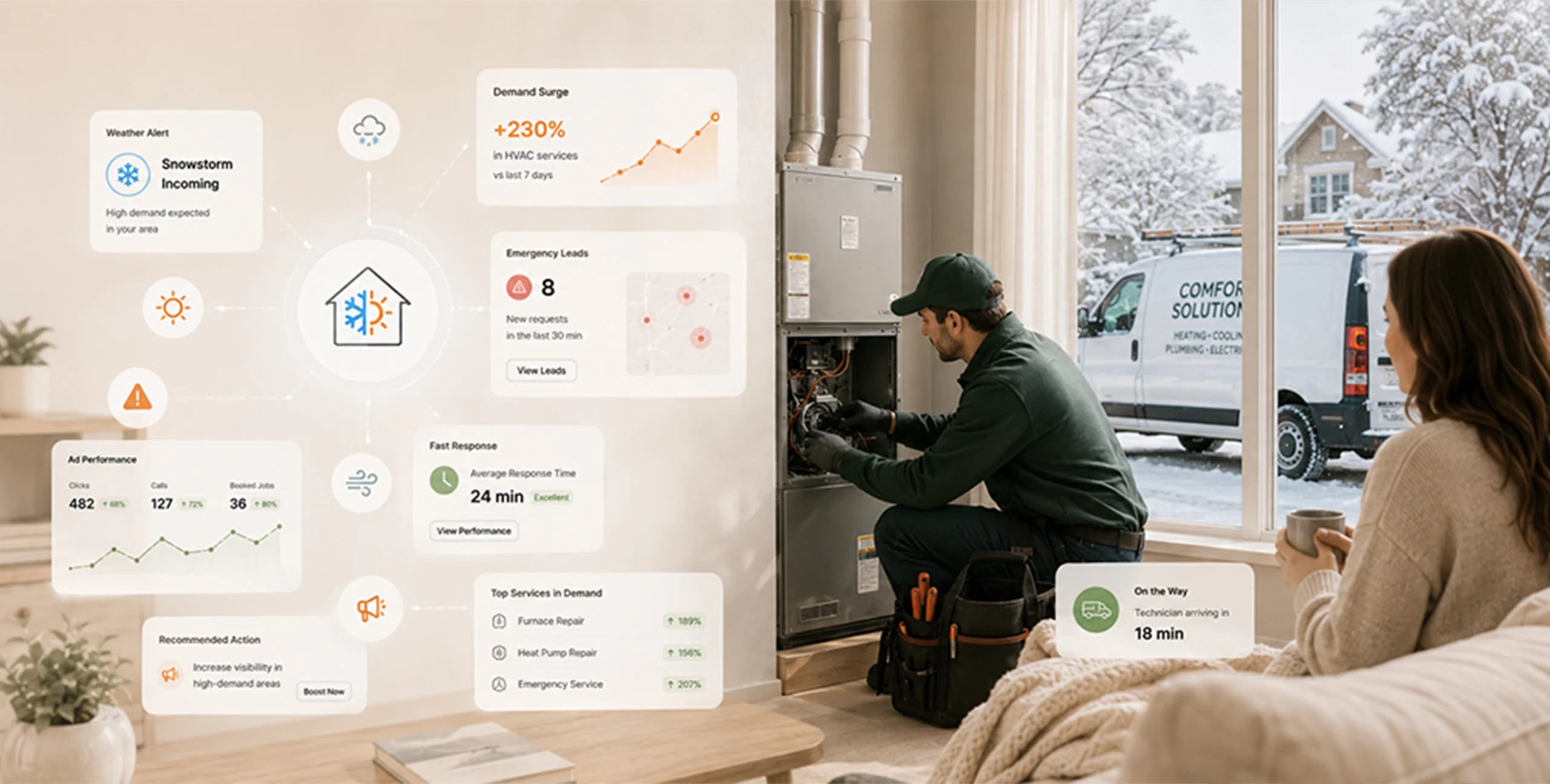
Spending money on home services marketing without tracking performance is the same as running a job without pulling a permit, it might work out, but you have no accountability and no protection when something goes wrong.
The businesses that consistently improve their marketing results aren’t necessarily the ones with the biggest budgets. They’re the ones that measure the right things, review them regularly, and adjust based on what the data actually says.
The KPIs Worth Tracking
Not every metric deserves equal attention. Vanity metrics, total impressions, social media followers, page views, tell you very little about whether your marketing is generating revenue. Focus here:
| KPI | What It Tells You |
| Cost Per Lead (CPL) | How much you’re spending to generate each inbound inquiry, by channel |
| Cost Per Booked Job | The real unit economics, what it costs to convert a lead into paying work |
| Lead-to-Booking Rate | Where leads are dropping off; a low rate signals a sales or response issue, not a marketing one |
| Revenue by Channel | Which channels drive the highest-value jobs, not just the most leads |
| Call Answer Rate | What percentage of inbound calls are actually answered; missed calls are missed revenue |
| Review Velocity | How quickly your review count is growing month over month |
| Return on Ad Spend (ROAS) | For paid channels: revenue generated per dollar spent |
| Organic Traffic Trend | Month-over-month SEO performance; a lagging indicator of content and local SEO health |
Review Results on a Set Cadence
Weekly check-ins on paid channel performance (budget pacing, CPL, conversion rates). Monthly reviews of organic performance, lead volume by channel, and booking rates. Quarterly strategic reviews that evaluate the full channel mix and inform budget reallocation decisions.
Without a review cadence, data accumulates but doesn’t drive decisions. The cadence turns measurement into action.
Connecting Offline and Online Marketing Activity
One of the most persistent blind spots in digital marketing for home service contractors is the gap between online marketing activity and offline outcomes. A homeowner sees your ad online, calls your office, books a job, and pays an invoice, but if your marketing platform and your job management software don’t share data, you have no idea that the ad drove that revenue.
This attribution gap causes two expensive problems: you undervalue the channels that are actually working, and you keep spending on channels that look active but aren’t driving booked jobs.
The Future of Home Services Marketing Beyond 2026
The home services industry is not on the edge of disruption, it’s in the middle of it. The businesses investing in their marketing infrastructure now are building advantages that will compound over the next three to five years. The ones waiting for the market to stabilize before investing are already behind.
Here’s where online marketing for home services is heading:
AI Search Will Reshape Lead Generation
Google’s AI Overviews, ChatGPT, Perplexity, and voice assistants are already changing how homeowners find service providers. Within the next two to three years, a meaningful share of home services leads will originate from AI-mediated searches rather than traditional blue-link results. Businesses that invest now in structured content, clear entity data, strong local signals, and authoritative expertise will be the ones that AI tools surface and recommend. Those that don’t will find their organic visibility eroding even as they maintain their traditional SEO rankings.
Automation Will Separate Operators from Competitors
Marketing automation, AI-driven follow-up sequences, predictive maintenance reminders, dynamic pricing tools, automated review requests, is moving from enterprise-only technology to accessible tools for independent home services businesses. The operators who build these systems now will handle higher lead volumes with less labor, respond faster, and retain more customers, structural advantages that are hard to close once established.
Video Will Become the Default Content Format
Short-form video is already the dominant content format for engagement across every major platform. For home services, it’s a particular opportunity: the work is inherently visual, the expertise is demonstrable, and the trust built by seeing a real technician explain a real problem is qualitatively different from reading about it. Businesses that build video content libraries now, YouTube tutorials, Instagram Reels, job walkthroughs, will have compounding organic assets that generate leads and build authority for years.
Ready to Build Your Blueprint? COLAB Can Help.
Understanding the full scope of home services marketing is one thing. Building and executing a coordinated strategy across every channel, while running a business, is another challenge entirely.
COLAB works with home services companies to build integrated marketing systems that generate consistent leads, build lasting brand authority, and deliver measurable ROI. From technical SEO and paid media to content strategy and reputation management, we build the full blueprint, and then execute it.
If you’re ready to stop guessing and start growing, let’s talk.
FAQs
Home services marketing is the collection of strategies, digital and offline, that service-based businesses use to attract new customers, convert leads, and retain existing ones. It includes local SEO, paid advertising, content marketing, reputation management, email, social media, and more.
There is no single best channel, the most effective approach combines Google Local Services Ads for immediate high-intent leads, local SEO for long-term organic visibility, and reputation management to convert that traffic. The right mix depends on your budget, market, and growth stage.
A combination of Google Local Services Ads, strong local SEO, an optimized Google Business Profile, and a consistent review generation strategy is the most reliable foundation for steady lead flow. Paid social and content marketing accelerate results for businesses ready to invest beyond the basics.
A high-performing home services website loads in under three seconds on mobile, has individual pages for each service and service area, displays clear contact information and CTAs above the fold, includes trust signals like reviews and credentials, and is technically sound, fast, secure, and free of crawl errors.